Author: Canadian Drug Policy Coalition

  • Looking ahead to 2021 and the fight for drug policy reform

    Looking ahead to 2021 and the fight for drug policy reform

    canadian drug policy coalition 2021 canadian drug policy coalition 2021

    There’s no denying that 2020 was a disaster. The human toll can be expressed in numbers, but the impact and actual loss is incalculable. Friends, family, lovers and co-workers died—many alone, and most from failed drug policy. 

    Though many of us understandably want to forget about this past year, we must not overlook the courage, ingenuity, and determination that helped move the dial on public health, harm reduction, and drug policy. COVID-19 helped the public see and understand the dire health inequities plaguing Canadian society. Supervised consumption, decriminalization of drugs, and safe supply entered public discourse and consciousness in a way they hadn’t in the past. This was due to the work of frontline advocates and communities affected by the harms of prohibition.

    A mourner sits on the ground at a rally in Vancouver
    International Overdose Awareness Day; Vancouver; 2020

    Not only did the overdose epidemic continue to rage in 2020, but the addition of the COVID-19 pandemic meant that Canadians were isolated from their regular supports. COVID-19 may have finally brought some folks shelter, but it also came with an increased risk of overdose because these individuals were now living alone. 

    Looking forward, there is an enormous amount of work to be done in 2021. The illegal drug market is still tainted with poisoned drugs. Stigma and discrimination still push people into the shadows. Municipal and provincial governments continue to deny the evidence of harm reduction and its positive impacts. We must keep the pressure on as we endeavor to change the minds of our elected leaders and convince them to support progressive drug policy. 

    In 2021, the Canadian Drug Policy Coalition will train its focus on decriminalization and the legal regulation of drugs to help end the harms of the toxic drug market. We will do this through a range of major projects, each with its own audience and goal to push Canada towards a future free from drug policy-related harm.

    Rally in support of Lethbridge Overdose Prevention Site; Lethbridge, AB; 2020

    At the frontend of our efforts is, Getting to Tomorrow: Ending the Overdose Crisis, a national public health dialogue project aimed at helping Canadians realize that we all share the same goals: a safe and secure society free from the harms of a toxic drug supply. The project will bring together community leaders across Canada to identify shared values, goals, and a collective vision for change so that Canadians can work together towards solutions. Getting to Tomorrow aims to bridge the divide within communities that so often stands in the way of life-saving progress and build a broad base of public support that will help animate our other major initiatives and efforts.

    Broken Drug Policies is a similar project focused in British Columbia hoping to leverage the gains in drug policy, already introduced at a provincial level, to accelerate drug policy reform. Broken Drug Policies will help the public understand how interconnected systems (health care, criminal justice, social services, employment) drive substance use and the power they as citizens have in influencing those systems to create change. 

    The Regulation Project will do a deeper dive into what a system of legal regulation of drugs could look like. Ultimately, it is only through a safer and regulated supply of drugs that the scourge of overdose deaths can end, and envisioning this future free from harm is a vital first step. As part of the project, CDPC will be consulting key stakeholders—principle among them people who use drugs—on what factors would ensure that a system of legal regulation would succeed. How would people access safer drugs? Who would have access to them? When and where could they these substances be obtained? All these questions will be explored to lay the blueprint for life-saving change.

    Two men carry a large black wooden coffin along the march route
    Vancouver Area Network of Drug Users Memorial March; Vancouver; 2020

    Working alongside this effort is Imagine Safe Supply, which seeks to clearly articulate the concept of “safe supply” and what it means for those most directly impacted by the harms of our current drug policy: people who use drugs. Having a clear and accurate understanding of this concept is the necessary foundation for transformative policy.

    With the rollout of COVID-19 vaccines we are happy to begin planning of Stimulus 2022: Drugs, Policy and Practice in Canada, the country’s largest harm reduction and drug policy conference that will bring together harm reductionists, people who use drugs, government, community leaders, advocates and academics to share knowledge and build community and capacity to better respond to the worst overdose crisis in Canadian history. 

    As we look to 2021, we look with hope. We need to come together now more than ever as we walk this tremendous path to change failed drug policies and save lives. We hope that you’ll walk alongside us.

  • Legal and civil society groups commend City of Vancouver’s leadership on drug decriminalization

    Legal and civil society groups commend City of Vancouver’s leadership on drug decriminalization

    Vancouver, Coast Salish Territories – Today, the Mayor of Vancouver, supported by Vancouver Coastal Health, announced a motion that could lead to the decriminalization of simple drug possession in Vancouver. If the motion is passed, Vancouver City Council will request an exemption from the federal government — under the Controlled Drugs and Substances Act — that would protect all people in Vancouver from the enforcement of simple drug possession as a criminal offence. If implemented properly, this could eliminate all criminal consequences for possessing drugs for personal use. Decriminalization would be a critical move towards addressing record overdose deaths and rampant stigma against people who use drugs, reducing barriers to accessing services, and avoiding ineffective and unnecessary use of public funds.

    In May, Pivot Legal Society, the Canadian Drug Policy Coalition (CDPC), and the HIV Legal Network called on the federal government to use this same exemption power to decriminalize simple drug possession. To date, more than 170 civil society organizations have endorsed this call. Following their October release of a report on drug decriminalization in Vancouver, Pivot launched an email petition urging Vancouver’s Mayor and Council to apply for a local exemption and take more meaningful action than simply calling on other levels of government to do the right thing. Last week, the HIV Legal Network released a primer for municipal and provincial governments on why and how to request an exemption from the federal Health Minister to effectively decriminalize simple drug possession.

    READ MORE: The City of Vancouver announcement on decriminalization

    Pivot, CDPC, and the HIV Legal Network welcome Vancouver’s leadership in seeking to curb an ineffective and deadly war on people who use drugs. We urge City Councillors to quickly and unequivocally adopt the proposed motion as presented, without proposing administrative sanctions or other amendments that would weaken its positive outcomes. In addition, we urge cities and provinces across the country to take similar action. Inaction will only lead to more preventable deaths and infections. Caitlin Shane, Drug Policy Staff Lawyer at Pivot Legal Society, says all municipalities and provinces must urgently tackle the drug policy crisis ravaging communities across the country:

    “Overdose fatalities have ballooned during COVID-19, far surpassing the number of fatalities caused by the coronavirus itself. Criminalizing people who use drugs is a public health disaster that causes untold harms to poor and racialized communities. Decriminalization is a key step towards reducing over-policing and rampant incarceration, and re-allocating funds to health, harm reduction, and safe supply efforts.”

    READ MORE: Pivot Legal Society’s Report: Act Now! Decriminalizing Drugs in Vancouver

    Scott Bernstein, Director of Policy at CDPC, calls the announcement bold and necessary:

    “A growing chorus of civil society and rights organizations, the Canadian Association of Chiefs of Police, public health officers, and people who use drugs across the country have decried the failure of drug prohibition and significant harms caused by treating a public health crisis as a criminal law issue. We are pleased that Vancouver is heeding these calls.”

    Sandra Ka Hon Chu, Director of Research and Advocacy at the HIV Legal Network, urges other cities, provinces, and territories to follow Vancouver’s lead and apply for a similar exemption:

    “Policymakers have a responsibility to adopt measures that uphold the health and safety of people who use drugs in their respective jurisdictions. Requesting an exemption from the federal Minister of Health is simple and vital. Municipal and provincial actors can take concrete actions now to move from harmful, failed criminalization to evidence-based public health approaches that respect human rights.”

    READ MORE: HIV Legal Network’s Report: Decriminalizing People Who Use Drugs: A Primer for Municipal and Provincial Governments

    Download PDF Version

    — 30 —

    Media Contacts

    Sozan Savehilaghi, Pivot Legal Society
    Email: [email protected]
    Direct: 604-255-9700 ext. 154

    Peter Kim, Canadian Drug Policy Coalition
    Email: [email protected]
    Direct: 604-787-4043

    Janet Butler-McPhee, HIV Legal Network
    Email: [email protected]
    Direct: 647-295-0861

    About Pivot Legal Society

    Pivot Legal Society is a leading Canadian human rights organization that uses the law to address the root causes of poverty and social exclusion in Canada. Pivot’s work includes challenging laws and policies that force people to the margins of society and keep them there. Since 2002 Pivot has won major victories for sex workers’ rights, police accountability, affordable housing, and health and drug policy. http://www.pivotlegal.org/our_story

    About Canadian Drug Policy Coalition

    The Canadian Drug Policy Coalition (CDPC) is a coalition of over 60 organizations and 7,000 individuals working to support the development of progressive drug policy grounded in science, guided by public health principles, and respectful of human rights. CDPC operates as a project within Simon Fraser University’s Faculty of Health Sciences. CDPC seeks to include people who use drugs and those harmed by the war on drugs in moving toward a healthier Canadian society free of stigma and social exclusion. https://drugpolicy.ca/

    About HIV Legal Network

    The HIV Legal Network, formerly the Canadian HIV/AIDS Legal Network, promotes the human rights of people living with, at risk of or affected by HIV or AIDS, in Canada and internationally, through research and analysis, litigation and other advocacy, public education and community mobilization. http://www.hivlegalnetwork.ca/

  • Prelim. patterns around opioid-related deaths in ON during COVID-19

    Prelim. patterns around opioid-related deaths in ON during COVID-19

    overdose deaths in ontario during covid overdose deaths in ontario during covid

    Click HERE for more resources

    “The rising rate of opioid-related deaths across Canada has been an ongoing and significant national public health crisis for over a decade.1 In just the first three months of 2020, there were 1,018 opioid- related deaths recorded in Canada, the vast majority of which (96%) were accidental.2 In the midst of this ongoing crisis, the emergence of the COVID-19 pandemic in Ontario led to the provincial declaration of a state of emergency on March 17, 2020.3 Within Ontario, the first wave of the pandemic was addressed with public health restrictions to mitigate the spread of COVID-19, which included physical distancing measures that resulted in reduced capacity for pharmacies, outpatient clinics, and harm reduction sites providing care to people who use drugs. Despite the intention to reduce the impact of COVID-19, there is concern that these measures could lead to unintended harms.”

    Source: Ontario Drug Policy Research Network

  • Canadian Drug Policy Coalition launches national dialogue series on the overdose crisis and COVID-19

    Canadian Drug Policy Coalition launches national dialogue series on the overdose crisis and COVID-19

    canadian drug policy coalition launches dialogues canadian drug policy coalition launches dialogues

    Vancouver, BC—Never before in Canadian history have communities confronted two concurrent public health catastrophes like the overdose crisis, fueled by a toxic drug supply, and a coronavirus pandemic that has uprooted the routines of daily life and society. At the heart of these converging crises are people who use drugs. COVID-19 has made everything worse for this community at a time when overdose deaths are rising across the country and individual health and safety is more precarious than ever.

    In response to this unprecedented time, the Canadian Drug Policy Coalition at Simon Fraser University, in partnership with the Morris J. Wosk Centre for Dialogue, is launching Getting to Tomorrow: Ending the Overdose Crisis—18 public health dialogues across Canada over the next two years aimed at identifying and moving towards solutions to the overdose crisis, in the context of COVID-19, by building consensus and shared meaning.

    “The COVID-19 pandemic has exposed the illegal drug toxicity death crisis as a catastrophic failure of Canada’s current approach to drugs. Governments have moved mountains in response to the COVID-19 pandemic while a coherent pan-Canadian approach to over 16,000 overdose deaths in the past five years has failed to materialize,” said Donald MacPherson, executive director of the Canadian Drug Policy Coalition.

    “We hope the Getting to Tomorrow dialogue series will inform, engage, and inspire Canadians to become more involved in building a new approach to drugs based on principles of public health and human rights, and lead to improved health and safety for all in our communities.”

    ~Donald MacPherson, Canadian Drug Policy Coalition

    Getting to Tomorrow is also hoping to use learnings from the COVID-19 pandemic to improve Canada’s overdose response at a time when lives are being lost at an unprecedented rate. More specifically, Getting to Tomorrow has three main goals:

    • Accelerate the adoption of public health- and human rights-based drug policies to guide government responses to drugs in Canada
    • Empower decision makers and the public to take evidence-based actions by providing the latest research on policies that could end the overdose crisis
    • Engage the public in dialogue on issues related to substance use and drug policy

    The dialogues will happen virtually (open to invited attendees only) and will invite leaders from diverse communities, including people who use drugs, community and business leaders, government officials, First Nations, public health officials, and law enforcement, to share their stories of navigating the challenges of the overdose crisis during a time of pandemic and global instability. By sharing perspectives and stories, communities can come to recognize the commonalities that unite us rather than the differences that set us apart. This can lay the groundwork for transformative change.

    Getting to Tomorrow will begin in Montreal on October 7 with community partner l’Association des intervenants en dépendance du Québec (AIDQ).

    “As Montreal is one of the epicentres of COVID-19 in Canada, the lives of people who use substances are more than ever at risk as the number of overdoses is dramatically rising,” said Sandhia Vadlamudy, executive director of l’Association des intervenants en dépendance du Québec.

    “Having such a dialogue in Montreal, as well as any other city, will help us understand each other’s perspectives and work together towards better longer-term solutions where everybody wins.”

    ~Sandhia Vadlamudy, Association des intervenants en dépendance du Québec

    Getting to Tomorrow is supported by Health Canada through the Substance Use and Addictions Program.

    www.gettingtotomorrow.ca

    Contact

    Peter Kim
    Strategic Communications Manager
    Canadian Drug Policy Coalition
    [email protected]
    604-787-4043

    Download PDF Version of Release

    – 30 –

    About Canadian Drug Policy Coalition

    The Canadian Drug Policy Coalition (CDPC) is a coalition of 60 organizations and 7,000 individuals working to support the development of progressive drug policy grounded in science, guided by public health principles, and respectful of human rights. The CDPC operates as a project within Simon Fraser University’s Faculty of Health Sciences. The CDPC seeks to include people who use drugs and those harmed by the war on drugs in moving toward a healthier Canadian society free of stigma and social exclusion.

    About Morris J. Wosk Centre for Dialogue

    Simon Fraser University’s Morris J. Wosk Centre for Dialogue creates real-world impact for society’s most pressing challenges by using dialogue and engagement to co-create solutions, exchange knowledge, support community-engaged learning, and to build the capacity of others in the knowledge and practice of dialogue. They strive to bring together diverse voices, stories, perspectives and experiences, with a goal to increase understanding about others and ourselves. It is a conversational process intended to help us gain insight into complex problems to which no one person holds the answer.

    About Association des intervenants en dépendance du Québec (AIDQ)

    AIDQ is a non-profit organization that includes stakeholders from all sectors interested in the field of addictions in Quebec, such as the public, private and community sectors, public health and social services, education, universities, research, public safety and the workplace. AIDQ’s mission is to promote and support intervention in the areas of prevention, harm reduction, treatment and the social reintegration of people with addictions and those at risk of becoming addicted, through skills development, information, collaboration, and the sharing of expertise.

  • Canada’s busiest supervised consumption site shuts its doors on International Overdose Awareness Day

    Canada’s busiest supervised consumption site shuts its doors on International Overdose Awareness Day

    ARCHES closes on international overdose awareness day, ARCHES closes on international overdose awareness day

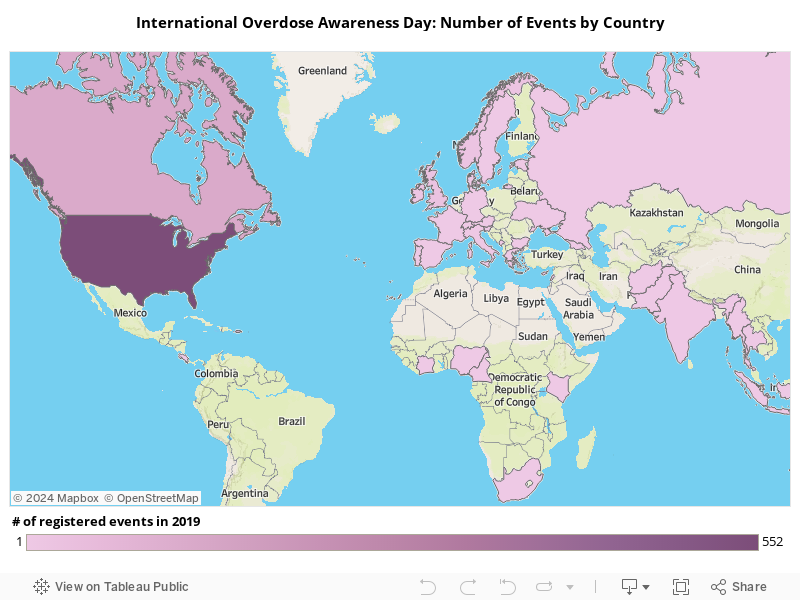
    International Overdose Awareness Day began in Australia in 2001 as a bold and public call to combat stigma around drug use, honour the lives that have been lost to overdose, and educate society on the life-saving value of harm reduction. It has grown every year, with a record 874 global events and participation from 39 countries, including Canada, in 2019. These are all encouraging signs that society is waking up to (and communities are mobilizing around) the truth that drug prohibition has failed and a new human rights- and public health-based approach to drug policy is desperately needed. 

    (Interactive)

    But it’s hard to sense this shift from the actions of the Alberta government, which recently cut funding to Canada’s busiest supervised consumption site, ARCHES, which forced its closure. The doors close today, International Overdose Awareness Day—a time when we should be moving towards progress through compassionate, evidence-based drug policy by embracing more harm reduction, not less. Instead, Alberta, in darkly ironic fashion, is sliding backwards—a regress that erodes the public health and safety of one of Canada’s hardest hit provinces when it comes to overdoses.

    Since opening in March of 2018, ARCHES, located in Lethbridge, Alberta, saw an average 663 visits per day. “That’s more daily visits than the busiest sites in Toronto—a city of more than two million, and Vancouver—where Canada’s first supervised consumption site was founded in 2003,” according to the Star Edmonton. The number of lives saved and positive impact to the greater community is immeasurable, so it is both baffling and dangerous to shut the doors on such a vital health service. Research from chief coroners across Canada makes it clear that using drugs alone is extremely risky at a time when the drug market is so toxic. People will likely die without the supervised consumption services ARCHES provides and the supportive environment it affords.

    In the first quarter of 2020, there were 127 fatal overdoses related to fentanyl in Alberta, an increase from the previous quarter where there were 105. 85% of the deaths this year occurred in larger urban centres like Edmonton, Calgary, Red Deer, and yes, Lethbridge1.

    In such a climate of death and human suffering, governments should be expanding harm reduction, not scaling it back. Alberta’s provincial government decided to pull funding after a financial audit found suspected financial irregularities around spending and expenses. But this is no reason to punish the marginalized clients who use the facility daily—whose very lives depend on its services and the community of care that has formed around them.

    TAKE ACTION: Sign the open letter to restore funding to ARCHES

    The Government of Alberta announced a mobile site will replace the services lost with the closure of ARCHES. But advocates warn that this can in no way replace the scale of services and community building a site like ARCHES provided. They’ve done the math, and the numbers are a cause for deep concern.

    Across Canada fatal overdoses are climbing, fuelled by the stress and public health strictures of COVID-19. In July, deaths hit a grim milestone in Toronto, claiming more lives than the coronavirus. Saskatchewan recorded more fatal overdoses in the first eight months of this year than all of 2018, “meaning the province may have set a new record for the number of people who have lost their lives to overdoses. The Saskatchewan Coroners Service says there were 40 confirmed and 139 suspected drug toxicity deaths between Jan. 1 and Aug. 6, for a total of 179,” writes Zak Vescera of the Chronicle Herald.

    (Vancouver Area Network of Drug Users memorial march; Vancouver; August 15, 2015)

    And in British Columbia, two consecutive months of record-breaking overdose deaths have both shattered and enraged the spirits of affected communities. This May there were 171 fatal overdoses; in June, 177; and in July, 175. Across Canada, grief, fatigue, and rage surface in equal measure as frontline communities fighting two public health crises (COVID-19 and overdoses) also battle hostile local governments threatening their ability to save lives.

    READ MORE: COVID-19 harm reduction resources

    Now more than ever, International Overdose Awareness Day is needed to affirm the value of harm reduction and the policy changes needed to stem the tide of fatal overdoses: decriminalization and a safe supply of drugs. At a federal level, there is slow and incremental progress. It is not nearly good enough, but better than the backwards direction we’re seeing from a provincial government that seems driven by ideology and out of touch with the science and evidence supporting harm reduction.

    Though drug policy is a federal matter, provincial governments have the power to alleviate some of the harm created by prohibition—which is fuelling overdose death—by, for example, deprioritizing police enforcement of certain drug laws (de facto decriminalization) and choosing where to spend money. Their funding decisions can also create serious harm for affected communities, as will likely be the case in Lethbridge.


    [1] https://open.alberta.ca/dataset/f4b74c38-88cb-41ed-aa6f-32db93c7c391/resource/45e03e51-0fa8-49f8-97aa-06b527f7f42c/download/health-alberta-opioid-response-surveillance-report-2020-q1.pdf

  • OPEN LETTER: Alberta Government must reinstate funding to ARCHES and harm reduction services in Lethbridge

    OPEN LETTER: Alberta Government must reinstate funding to ARCHES and harm reduction services in Lethbridge

    open letter to alberta government, open letter to alberta government

    Add your name to the form below to sign on to the open letter.


    READ MORE: Canada’s busiest supervised consumption site shuts its doors on International Overdose Awareness Day

  • Convergent risk of COVID-19 and bacterial and viral infections among PWUD

    Convergent risk of COVID-19 and bacterial and viral infections among PWUD

    viral and bacterial infections and covid-19, viral and bacterial infections and covid-19

    Click HERE for more resources

    “Without adequate access to harm reduction interventions, PWUD are potentially at greater risk of acquiring blood-borne viruses (BBVs) and severe bacterial infections. Individual, social, and structural determinants of health (e.g., unstable housing, incarceration, poverty, drug criminalization) associated with increased risk for bacterial infections and BBVs will likely place PWUD at greater risk of COVID-19 disease and death.”

    Source: International Journal of Drug Policy

  • Impact of COVID-19 on people who use drugs

    Impact of COVID-19 on people who use drugs

    impact of covid-19 on people who use drugs, impact of covid-19 on people who use drugs

    Click HERE for more resources

    “All respondents discussed the interconnected effects COVID-19 has had on their lives. Pandemic response measures such as physical distancing and social isolation have disrupted the healthcare and support services that people who use or have used substances and their communities typically rely on. As a result, best practices that existed before the pandemic to promote well-being, such as not using substances alone and having peer responders for accidental overdose, were now seen as putting people at risk. These effects of COVID-19 have exposed or aggravated health vulnerabilities for those who use substances, but have also encouraged creative, resilient responses to care for their well-being during this time.”

    Source: Canadian Centre on Substance Use

  • COVID-19 Graphics and Posters

    COVID-19 Graphics and Posters

    For JPGs and PNGs, right click to download image